

This ceiling fan cleaning guide contains affiliate links. If you purchase through one of these links, I may earn a small commission at no additional cost to you. I only recommend tools that make the job safer or easier.
If you want to know how to clean a ceiling fan without covering the room in dust, start by trapping the loose dust before you wipe the blades. The pillowcase method works best for heavy buildup, while an extendable duster is the easiest option when you can safely stay on the floor. For greasy kitchen fans, follow with a barely damp microfiber cloth and mild dish soap.
After 20 years of professional house cleaning, my biggest ceiling-fan rule is simple: use the least aggressive method that gets the job done. Fan blades can have delicate finishes, and too much pressure, water, or cleaner can damage them or throw the fan out of balance.
Before you start: ceiling fan cleaning safety
Turn off the fan and light, wait for the blades to stop, and allow the bulbs and glass shades to cool. For damp cleaning or removing a light cover, follow the fan manual and turn off power at the breaker when practical. Do not touch wiring or open the motor housing.
- Use a stable stepladder on a dry, level floor. Open and lock it completely.
- Never stand on a chair, bed, counter, or the top step of a ladder.
- Stay centered between the ladder rails and climb with three points of contact.
- Move the ladder instead of leaning or reaching sideways.
- Do not clean a fan that is loose, damaged, or unusually wobbly. Have it inspected first.
- Apply cleaner to the cloth, never directly to the fan.
- Keep water away from the motor, switches, bulb sockets, and electrical connections.
If climbing is not safe for you, use an extendable duster from the floor or ask someone else to handle the job. My cleaning tips for avoiding injuries apply to anyone who has difficulty with balance, mobility, or reaching overhead.
What you need to clean a ceiling fan
- A clean old pillowcase
- An extendable microfiber duster
- Two or three microfiber cloths
- Warm water and a few drops of mild dish soap
- A dry lint-free cloth
- A stable stepladder, only if necessary
- An old sheet or towel to protect furniture below the fan
Check your fan manufacturer’s care instructions before using any liquid. Different blades may be painted, laminated, veneered, or made from unfinished wood, and one cleaning solution is not appropriate for every finish.
How to dust a ceiling fan without making a mess
Method 1: Use a pillowcase for heavy dust
The pillowcase method is my favorite when the tops of the blades have visible dust. It traps the dust inside the fabric instead of dropping it onto the bed, floor, or furniture.
- Place an old sheet or towel under the fan if needed.
- Position a stable stepladder so you can reach the blade without stretching.
- Slide a clean pillowcase over one blade.
- Hold the blade gently near the bracket with one hand. Use the other hand to press the pillowcase lightly against the top and bottom of the blade.
- Pull the pillowcase toward the tip so the dust stays inside it.
- Repeat on every blade without bending or pulling down on them.
- Shake the pillowcase outside, then wash it normally.

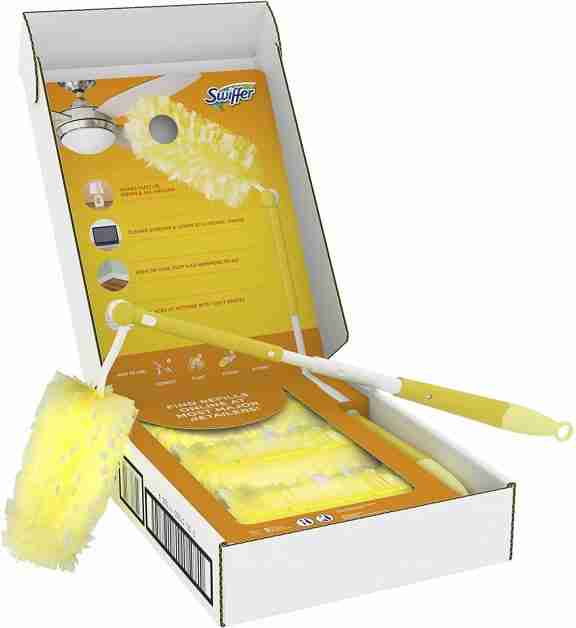
Method 2: Use an extendable duster from the floor
An extendable duster is the simplest choice for routine ceiling fan dusting. It is especially useful when the fan is just beyond comfortable reach and you do not need to remove sticky residue.
- Turn the fan off and wait until it stops completely.
- Extend the pole only as far as needed so it remains easy to control.
- Start at the motor housing and work downward.
- Dust the top, bottom, and edges of each blade using light pressure.
- Finish with the blade brackets and the outside of the light fixture.
- Vacuum or wipe the floor after the dust has settled.

Method 3: Use a dry microfiber cloth
A dry microfiber cloth gives you more control than a duster and works well for light dust or a final pass. Support each blade near its bracket and wipe from the center toward the tip. Avoid pressing down or twisting the blade.

How to deep clean sticky or greasy ceiling fan blades
Kitchen fans often collect a sticky mixture of dust and cooking residue. Dry dusting alone may smear it, so remove the loose dust first and then use a mild, barely damp cleaning method.

- Turn off the fan and protect the furniture or floor below it.
- Remove loose dust with the pillowcase or duster method.
- Add a few drops of mild dish soap to warm water.
- Dip a microfiber cloth into the solution and wring it out thoroughly. It should be damp, not wet.
- Test a hidden area first and check for discoloration or damage.
- Support the blade near the bracket while wiping the top, bottom, and edges.
- Use a second barely damp cloth to remove soap residue if necessary.
- Dry each blade immediately with a clean cloth.
- Wipe only the outside of the motor housing with a dry or barely damp cloth. Keep moisture away from openings.
Ceiling-fan manufacturer Hunter recommends using a soft microfiber cloth, warm water, and a few drops of mild dish soap for sticky blades. Its current ceiling fan maintenance guide also advises applying the solution to the cloth rather than spraying the fan and avoiding bleach, abrasive cleaners, and harsh chemicals.
If you use a stronger grease-cutting product, read the surface directions and test first. My Dawn Powerwash review explains where that product performs well, but never spray it directly onto a ceiling fan or near the motor and electrical components.
How to clean the ceiling fan light fixture
- Turn off the fan and light. Let the bulbs and glass cool completely.
- Follow your fan manual before removing a globe or glass shade.
- Support the glass securely as you loosen the fasteners.
- Wash removable glass in warm water with a small amount of mild dish soap, unless the manufacturer says otherwise.
- Rinse and dry the glass completely before reinstalling it.
- Dust bulbs and integrated LED covers with a dry, lint-free cloth. Do not apply cleaner to sockets or electrical parts.
If the fixture is difficult to remove, the fan is unusually high, or you cannot hold the glass safely while using the ladder, stop and ask for help.
Can you use a Magic Eraser on ceiling fan blades?
A Magic Eraser is not my first choice for fan blades. Melamine foam is mildly abrasive and may dull paint, laminate, wood finish, or decorative coatings. Start with mild dish soap and microfiber. If the manufacturer permits a melamine sponge, test a hidden spot and use very light pressure.
Never add bleach to a Magic Eraser or combine bleach with dish soap, Powerwash, vinegar, or another cleaner. Bleach can damage the fan finish, create unnecessary exposure, and become dangerous when mixed with other cleaning products. For safer uses and limitations, read my Magic Eraser cleaning guide.
How often should you clean a ceiling fan?
For most homes, dusting every one to three months and deep cleaning every three to six months is a practical starting point. Clean more often when the fan is in a kitchen, the home has pets, someone is sensitive to dust, or you can see buildup on the blades. Hunter gives the same general ranges in its current maintenance guide.
You do not need to put every fan on a rigid weekly schedule. Add a quick fan check to your normal room-cleaning routine and clean it when you see a film forming. If you need a manageable plan for the rest of the house, use my Bare Minimum Cleaning Schedule.
Ceiling fan cleaning mistakes to avoid
- Turning the fan on before the blades are completely dry
- Spraying cleaner directly onto the fan
- Soaking the blades or motor housing
- Using bleach, abrasive powders, or harsh chemicals on the finish
- Pressing hard enough to bend a blade or blade bracket
- Standing on furniture or overreaching from a ladder
- Removing hot bulbs or glass shades
- Taking apart the motor or electrical components
Why is my ceiling fan wobbling after cleaning?
Uneven dust buildup can sometimes contribute to wobbling, so cleaning every blade may help. A persistent wobble can also come from a loose part, bent bracket, warped blade, mounting problem, or uneven blade weight. Turn the fan off if it continues to wobble. Check the manufacturer’s manual or have a qualified professional inspect it instead of continuing to run it.
Ceiling fan cleaning FAQ
What is the easiest way to clean a ceiling fan?
Use an extendable microfiber duster for light, routine dust. Use an old pillowcase when the blades have a heavy layer because it traps the dust instead of dropping it around the room.
How do you clean a ceiling fan without a ladder?
Use a lightweight extendable duster with an angled or flexible head. Stand to the side rather than directly under falling dust, keep both feet on the floor, and avoid pushing hard enough to bend the blades.
Can you vacuum ceiling fan blades?
You can use a vacuum with a soft dusting attachment if you can reach the fan safely and control the hose without pulling on the blades. A pillowcase or extendable duster is usually easier for high fans.
Can you spray cleaner directly on a ceiling fan?
No. Spray or pour the product onto a cloth away from the fan, then wring the cloth out. Direct spraying can send moisture into the motor housing, light kit, or electrical connections.
Should you clean both sides of the fan blades?
Yes. Dust is usually heavier on top, but cleaning both sides removes buildup more evenly. Support the blade near the bracket and use light pressure so you do not bend it.
The Cleaning Lady’s final advice
For ordinary dust, use a pillowcase or extendable duster. For grease, use a barely damp microfiber cloth with mild dish soap and dry the blade immediately. Skip bleach and aggressive scrubbing, protect the blade finish, and never trade ladder safety for a cleaner fan.


